

Keeping up with AI has felt like a fool’s errand, so I’ve stopped following or tuning into the amassing number of AI news reporters out there. You know what I mean; they get paid to post nothing but, “Forget Opus…GPT 5.4 is INSANE.” or, “I just canceled my OpenAI subscription,” with a shocked face on their YouTube titles.
It all feels like hype. But once in a while, I find a technology to be potentially useful. At first, I rejected OpenClaw as something like DeepSeek was last year—too hard for anyone to understand, but seemed monumental. Right now, OpenClaw is all the rage. Everyone is talking about it. So I figured I’d give it a shot after I watched a podcast earlier this week from Peter H. Diamandis. He had a guest on that was showing his agentic army of employees, and I thought, ‘this could be cool’.
Then I was excited to hear that I can run it locally on my DGX Spark. So now I’m determined to create an organization of digital employees (and start to give less personal data to OpenAI and Anthropic). I simply don’t want to continue feeding them my prompt logs for life so local AI seems like the right solution. It’s just super creepy that OpenAI is dabbling in ads, and likely already has some weird profile on my preferences to sell to companies around the world.
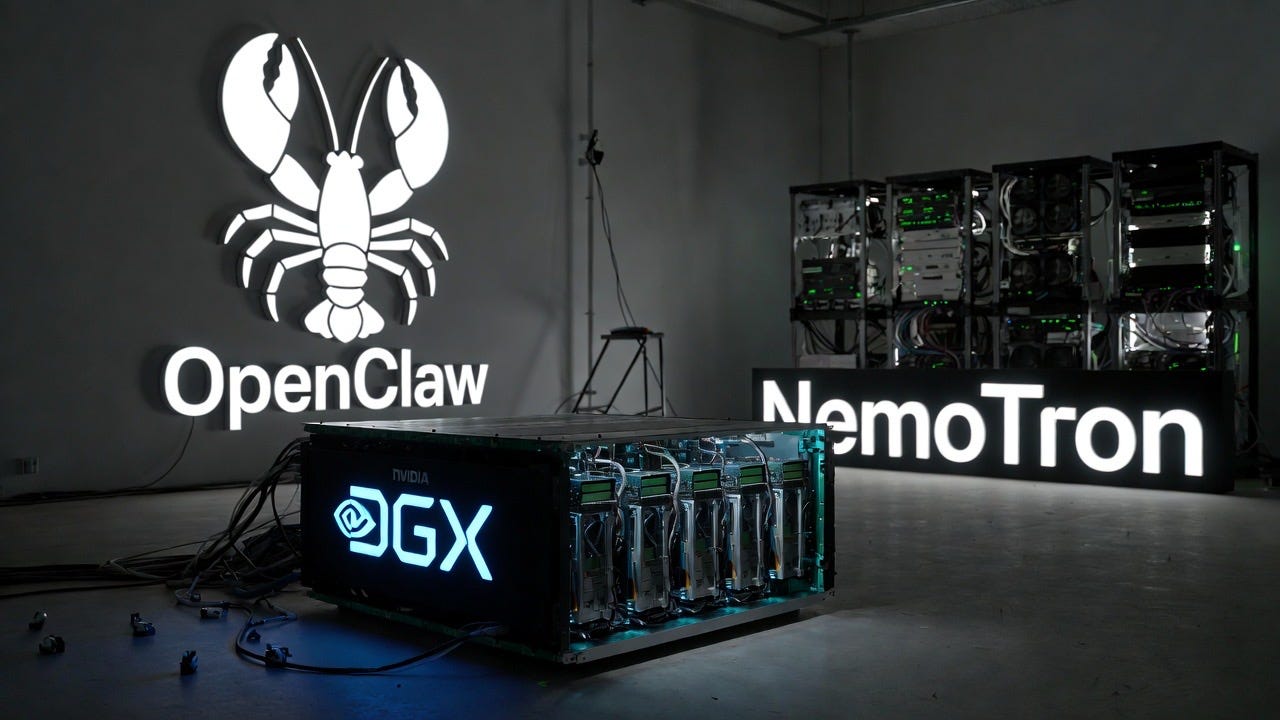
So creating a localized, private agent workforce using OpenClaw, that I can run on my DGX and that is powered by the Nvidia Nemotron model was the objective. That’s why it’s called NemoClaw (Nemotron + OpenClaw). But the process was not easy as opening terminal tabs still feels like learning a foreign language to me. And as much as I say I don’t want to use OpenAI for life, without GPT-5.4 I would not have been able to install OpenClaw on my DGX.
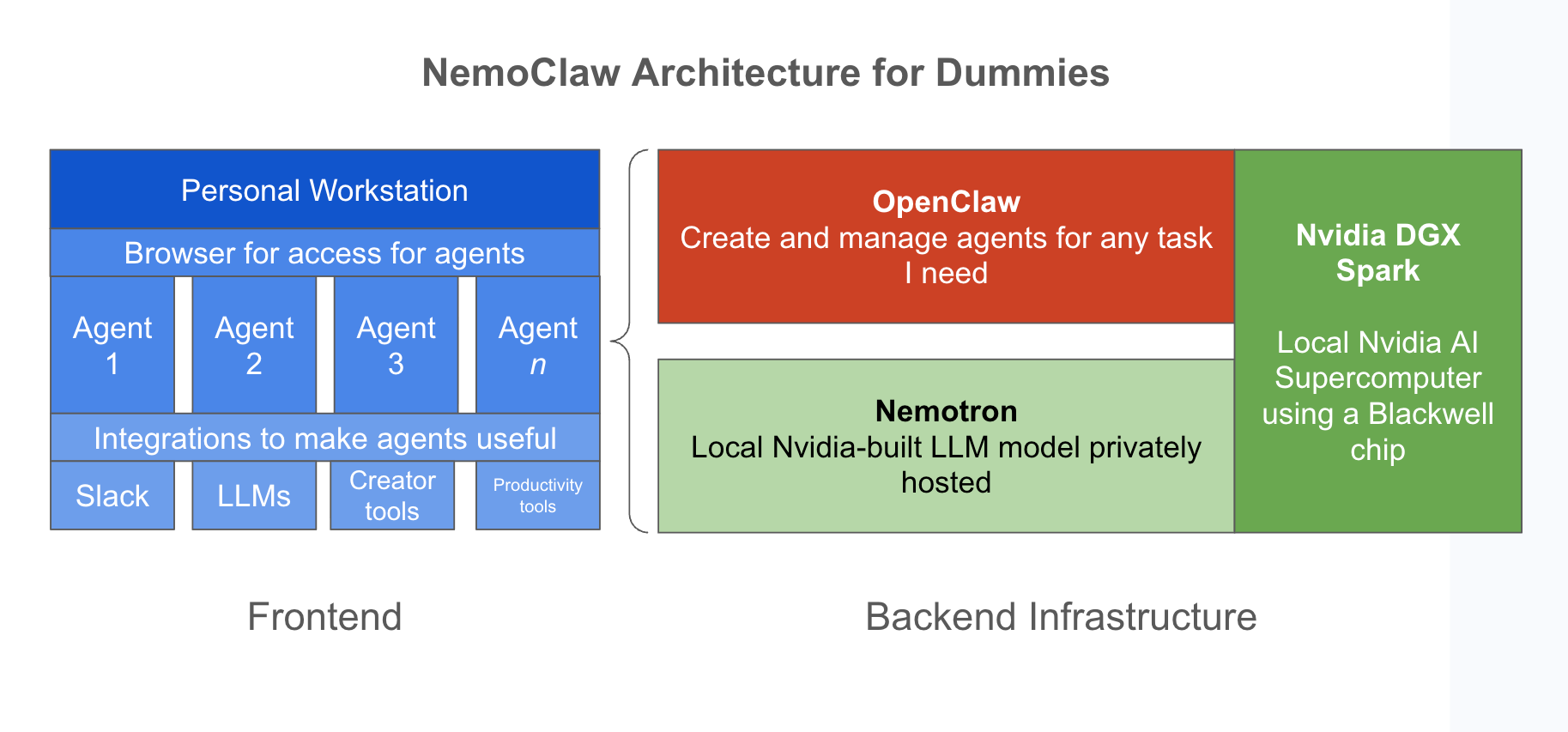
I’m happy to report that I have NemoClaw up and running on my DGX. After about 4 hours of set up, it’s now operating as my agentic infrastructure. I signed up for the Brave browser API so that I can ensure it’s able to find information on the web. And my next step is connecting it to either Telegram, Slack or other tools so that I can communicate with it outside of the terminal on my main workstation.
So to recap, the vision is to build an organization of digital agentic employees that I can task with objectives that add value to my life and to the projects I’m working on. One starting use case for me is going to be with growing my side startup project that I don’t have enough time for. Also I want to figure out content creation and perhaps building a social media manager to save me time.
Everyone is talking about how agents are going to become a force multiplier; I’m here to put that theory to the test for people like me that aren’t software engineers, and don’t have enough hours in the day.
Now that the infrastructure is in place, the process of building agents and running them locally will be Part II of this essay series. Let’s see how it goes.